
The MERL lies in the coastal town of Exmouth, approximately 1270km north of Perth and is serviced by Learmonth Airport 37km south. The small township is situated on the Northwest Cape.
Location
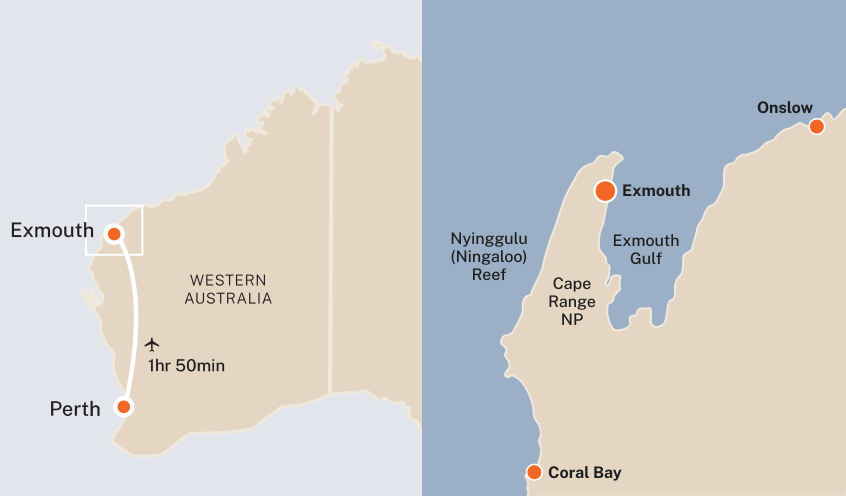
The western side of Cape Range Peninsula is fringed by the Nyinggulu Ningaloo Reef. The Ningaloo Reef Marine Park and adjoining Cape Range National Park are situated inside the Ningaloo Coast World Heritage Area.
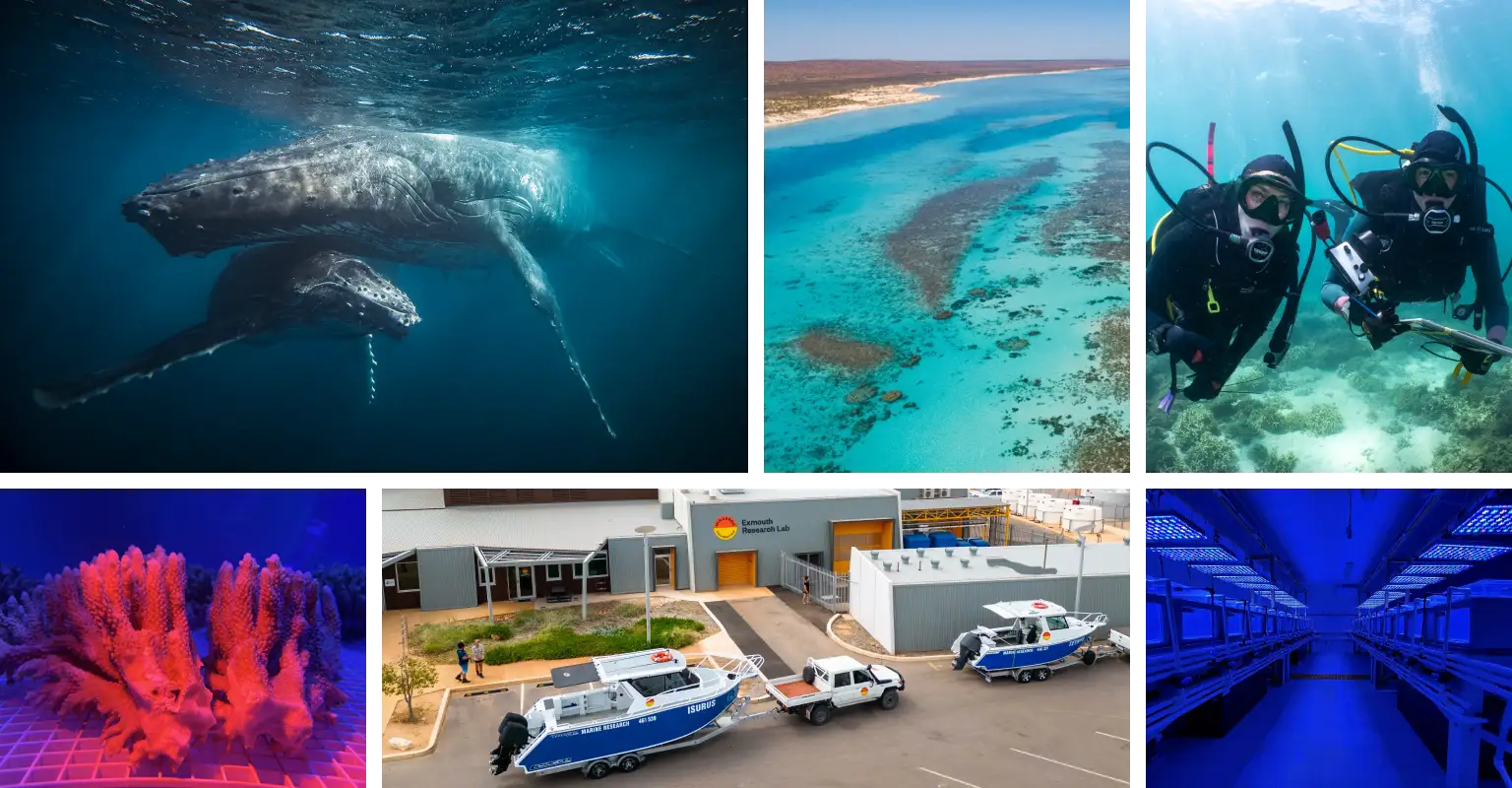
Area of operation
Field sites can be accessed via three boat ramps positioned around the Cape Range Peninsula. Nyinggulu (Ningaloo) Marine Park can be accessed from Tantabiddi boat ramp on the western side of the cape. The Exmouth Gulf is accessed from Exmouth Marina or Bundegi boat ramp, also providing access to a range of islands in the Exmouth Gulf.
Climate
Exmouth is characterised by a semi-arid climate with a long-term average rainfall of about 250mm/year (based on the Learmonth rainfall station). Mean maximum temperatures range from 38°C in January to 24.4°C in July.
The northwest Australian coastline between Broome and Exmouth is the most cyclone-prone region of the entire Australian coastline, having the highest frequency of coastal crossings during the summer months.
The two closet BOM weather recording sites to Exmouth are:
Learmonth Airport
(# 005007; Lat: 22.24 °S Long: 114.10 °E)
Vlamingh Head
(# 005024; Lat: 21.81 °S Long: 114.11 °E)
Smart buoys
MERL supports the WA wave buoy network in the Ningaloo region through a collaboration with the University of Western Australia. The WA wave buoy network uses a range of SOFAR spotters and SOFAR smart moorings to support a range of research projects focused on improving wave forecasting, coastal dynamics along reef-fronted, marine heatwaves, wave energy development, and the long-term WA wave climate.
Find real-time wave, temperature and wind data for the Ningaloo region at www.auswaves.org/wa-waves/ningaloo
Timing considerations
- Mar – Apr: Coral spawning.
- Apr – Jul: Peak whale shark season in Exmouth, the annual Ningaloo Whale Shark Festival usually takes place in July.
- Apr – Sep: Moderate temperatures.
- Jun – Nov: Exmouth’s peak whale-watching (and visitor) season.
- Aug – Nov: Peak wildflower season in Exmouth.
- Dec – Mar: Very hot temperatures.
Sustainability
The Exmouth Research Lab uses solar energy for 100 per cent of its electricity needs during daylight hours.
The use of single-use plastic bags and similar are discouraged at the Exmouth Research Lab and throughout Exmouth more generally. Please use non-plastic bags or cardboard cartons for carrying shopping.
Weather station
See real time data from the Minderoo Exmouth weather station.